

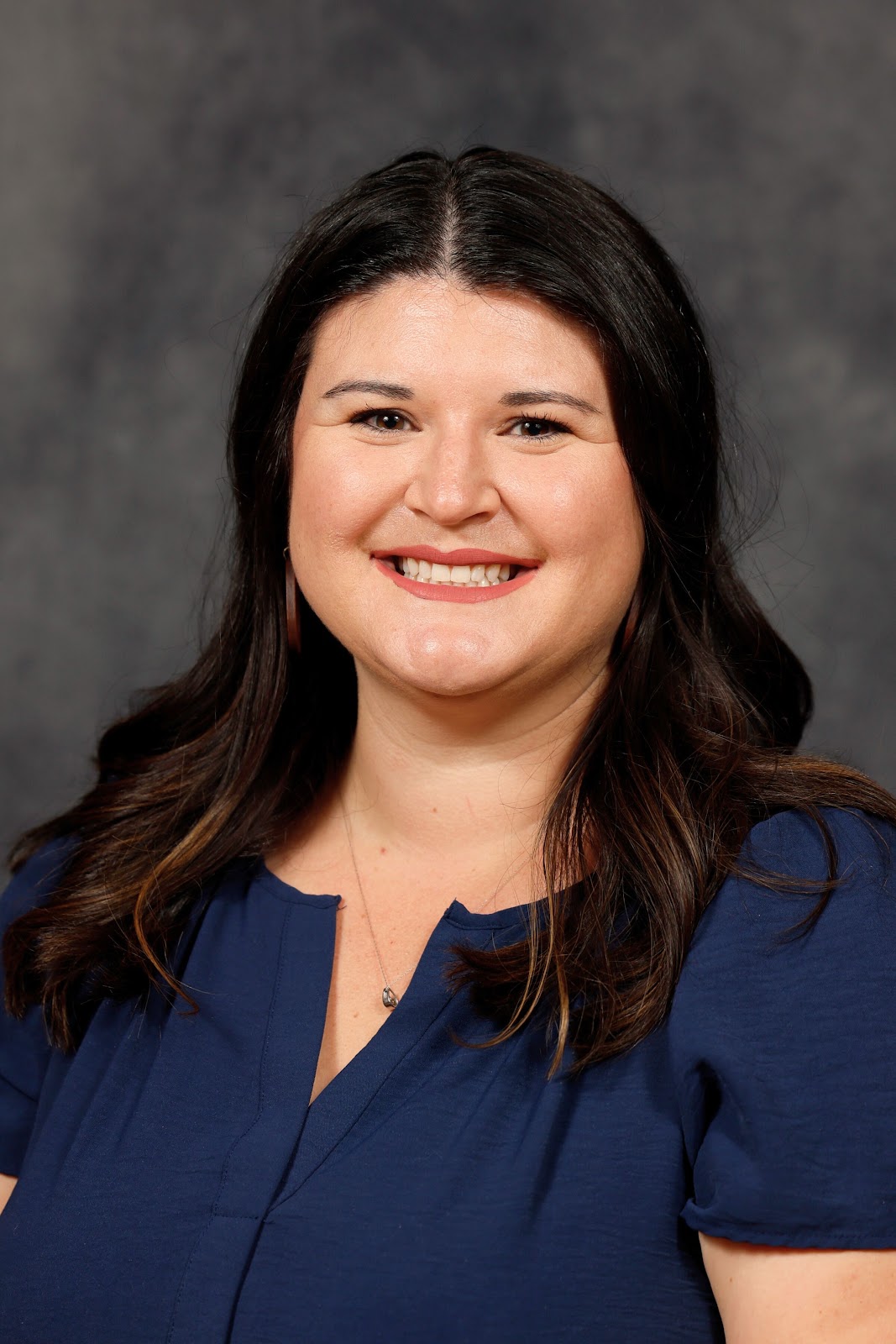
Dr. Shelby Gonzales is an Assistant Professor in Counselor Education at The Ohio State University. She earned her PhD in Counselor Education and Supervision from the University of South Carolina in 2022. As a previous school counselor in urban, rural, and Title 1 schools in North and South Carolina, she has worked with students and districts with a diverse spectrum of needs. Her research focus lies within the field of school counseling with an emphasis on facilitating role understanding and interdisciplinary collaboration within the K–12 school system, specifically between pre-service school counselors and principals.
She has published in journals such as Professional School Counseling and the Journal of Mental Health Counseling and co-authored several book chapters. She is an active member of and has presented at the conferences of the ACA, AARC, and ACES, among others. Dr. Gonzales is an editorial board member for the Professional School Counseling Journal and the Journal of School-Based Counseling Policy and Evaluation.
The Legacy of “Guidance” and the Lingering Language Gap
The evolution of the school counseling profession spans more than a century—originating in the early 1900s as vocational guidance designed to assist young men in finding vocational fit based on aptitude and abilities (Schmidt, 2003). While this foundational practice was historically termed “guidance counseling,” the field has undergone massive clinical and structural shifts.
To reflect the implementation of comprehensive, developmental frameworks, the American School Counselor Association (ASCA) formally adopted the title “school counselor” in 1990 (ASCA, 2003), shifting focus toward coordination, counseling, and consultation (Gysbers, 2010). In the early 2000s, ASCA further advanced the title “Professional School Counselor” to emphasize practitioners’ specialized role in supporting the academic, career, and social-emotional development of all P–12 students.
Although federal legislation formally recognized the transition from “guidance counselor” to “school counselor” in 2001, the operational realities of K–12 education have not kept pace. In addition to broad systemic misunderstandings across communities, building principals and administrators frequently perpetuate role ambiguity (McConnell et al., 2020; Windham & Tuttle, 2023). Because administrators hire, evaluate, and supervise campus personnel, they hold immense sway over how the counselor’s role is enacted on the ground. Improving mutual role understanding between counselors and administrators is the single most critical step toward reducing ambiguity and maximizing student support.
The Preparation–Practice Disconnect
When school counselors are permitted to do the work they are educated to do, their effectiveness is empirically undeniable (Carrell & Hoekstra, 2014; Domina et al., 2022; Lemberger et al., 2018; Liu et al., 2024; Steen et al., 2022). Yet across the country, practitioners encounter severe barriers when attempting to implement their specialized skills.
Graduate programs accredited by the Council for Accreditation of Counseling and Related Educational Programs (CACREP) require a minimum of 60 credit hours of rigorous clinical training, practicum, and internship. This preparation equips graduates with advanced clinical, developmental, and systems expertise. Despite this high standard, administrators continue to assign counselors tasks far outside their job descriptions (Holman et al., 2019; Lewis et al., 2020).
Because building leaders dictate daily staff schedules, mutual role clarity is not an academic luxury—it is an operational necessity. Only through shared understanding can districts ensure counselors meet student needs using the exact skills they were hired to provide.
Bridging the Divide Through Pre-Service Collaboration
Given the rapid evolution of school counseling over recent decades, it is understandable that professionals outside the field do not intuitively understand modern counselor preparation. However, while role confusion has been documented extensively, few structural interventions have sought to proactively build mutual understanding.
Research Spotlight: Collaborative Graduate Preparation
In an empirical study investigating cross-disciplinary training, Gonzales, Limberg, and Cunningham (2022) educated aspiring school counselors and future principals on one another’s professional standards, subsequently facilitating joint collaborative learning exercises.
The findings demonstrated significant growth on both sides: school principals developed a substantially deeper understanding of the counselor’s scope, while counselors gained crucial insight into administrative pressures and operational responsibilities.
Because counselors and principals are destined to collaborate daily within K–12 buildings, establishing this baseline understanding before either professional steps into a school is critical. Graduate programs in counseling and educational leadership share a responsibility to break down academic silos and foster collaborative coursework. Providing low-stakes environments to practice role negotiation allows future administrators and counselors to build healthy partnership models before entering the workforce.
The Student Cost of Counselor Misalignment
While pre-service interventions show great promise for graduate students, structured interventions for practicing educators remain scarce. On the ground, the biggest daily challenge remains the assignment of inappropriate administrative and supervisory duties that strip time away from direct student care—including classroom core curriculum, targeted Tier 2 skill groups, and Tier 3 crisis de-escalation.
As public schools face unprecedented behavioral, developmental, and emotional challenges, student access to full-scope school counselors is more urgent than ever. Counselors serve as a crucial lifeline through direct individual counseling, community mental health referral coordination, and systemic student advocacy. With adolescent rates of depression, anxiety, and suicidal ideation continuing to rise (Curtin & Garnett, 2023; Mental Health America, 2020), no district can afford to tie up its mental health staff with clerical tasks.
Moving Toward Sustainable Solutions
School counselors are at their most effective when their daily practice reflects their specialized education. While it is easy to say that administrators simply need to “better understand” the counseling role, resolving this century-old systemic tension requires deliberate, structural solutions.
Researchers and educational leaders must continue developing accessible, sustainable interventions that reduce role ambiguity and establish true collaborative partnerships between building principals and counseling teams. When we align operational responsibilities with professional expertise, the true beneficiaries are the students and families our schools exist to serve.
Leave a Reply